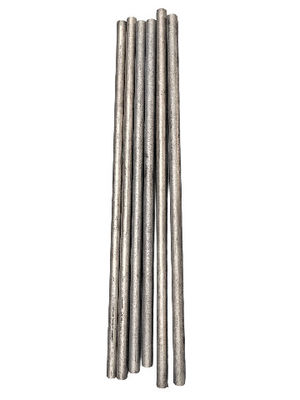
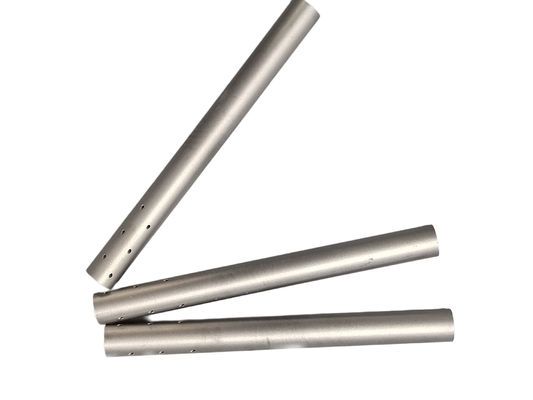
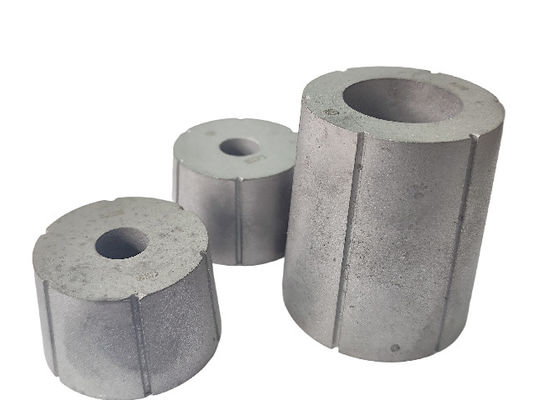
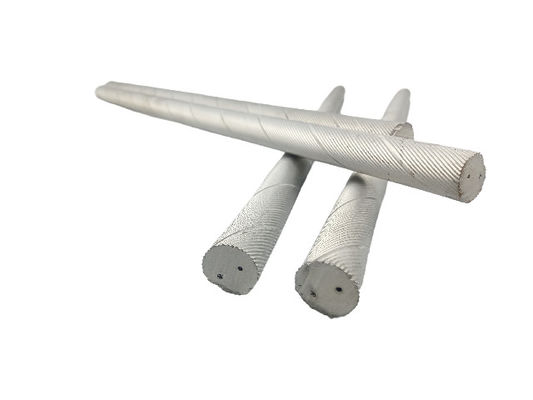
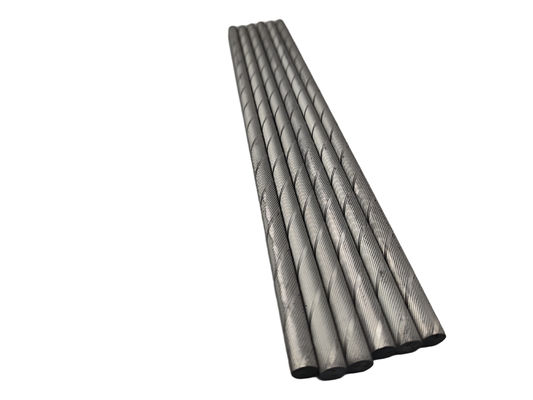
Have you ever faced the frustrating problem of standard threaded rods failing under demanding industrial conditions? Or witnessed material performance deteriorate dramatically in environments with extreme temperature fluctuations, creating potential safety hazards? Today we examine a high-performance solution: 17-4 PH stainless steel threaded rods - the undisputed "tough guys" of fasteners, engineered to conquer extreme challenges.
What Is 17-4 PH Stainless Steel?
17-4 PH (also known as Type 630) is a precipitation-hardening martensitic stainless steel. Simply put, this is a stainless steel that can significantly increase its strength through heat treatment (precipitation hardening). Its primary composition includes chromium, nickel, and copper - elements that provide exceptional corrosion resistance and high-strength characteristics.
The 17-4 PH Advantage: Strength Above All
The most outstanding feature of 17-4 PH threaded rods is their remarkable strength. Compared to common 316 stainless steel, its yield strength exceeds by more than four times! This means that under identical load conditions, 17-4 PH threaded rods demonstrate minimal deformation, ensuring superior connection reliability. Even when compared to high-strength duplex stainless steel 2205, 17-4 PH achieves 2.5 times greater yield strength. This extraordinary strength makes 17-4 PH threaded rods the ideal choice for applications requiring extreme stress resistance.
High-Temperature Performance: Stable at 600°F
Beyond its room-temperature strength, 17-4 PH threaded rods maintain excellent mechanical properties in high-temperature environments. They can preserve strength and hardness at temperatures up to 600°F (approximately 315°C), making them valuable for high-temperature equipment and aerospace applications. Imagine ordinary threaded rods softening and deforming inside engines or high-temperature reactors, while 17-4 PH threaded rods continue performing reliably, ensuring equipment safety.
Multiple Heat Treatment Options: Customized Strength Solutions
Another advantage of 17-4 PH threaded rods lies in their customizability. Through different precipitation hardening processes, manufacturers can produce eight distinct "aged conditions," each offering unique mechanical properties. This allows engineers to select the most appropriate aging condition for specific application requirements, achieving optimal cost-performance ratios. For instance, applications requiring high toughness might use lower aging temperatures, while those needing greater strength could employ higher aging temperatures.
Applications: Where Strength Matters Most
With their exceptional performance characteristics, 17-4 PH threaded rods serve numerous demanding applications:
-
Aerospace: Aircraft structures, engine components, and other parts requiring high strength and temperature resistance
-
Oil & Gas: Drilling equipment, subsea pipelines, and applications needing corrosion resistance and high strength
-
Chemical Processing: Reactors, pipeline connections, and equipment requiring corrosion and high-temperature resistance
-
Nuclear Industry: Reactor components and other parts needing radiation resistance and high strength
-
Food Processing: Machinery requiring sanitary conditions, corrosion resistance, and strength
Standard Specifications: ASTM A693 Grade 630
The production and use of 17-4 PH stainless steel threaded rods typically follow ASTM A693 standards, with Grade 630 specifically referring to 17-4 PH stainless steel. This standard covers various manufacturing processes including hot rolling, extrusion, and forging, while providing detailed specifications for material chemical composition, mechanical properties, and heat treatment processes to ensure product quality and reliability. The standard specifies that Type 630 stainless steel should be supplied in either solution-annealed or age-hardened conditions.
Conclusion: The High-Strength, Corrosion-Resistant, Customizable Solution
In summary, 17-4 PH stainless steel threaded rods represent an ideal choice for demanding applications, offering exceptional strength, excellent corrosion resistance, and customizable mechanical properties. For engineers seeking threaded rods capable of withstanding extreme challenges, 17-4 PH deserves serious consideration - a choice that means choosing reliability and safety.


 Your message must be between 20-3,000 characters!