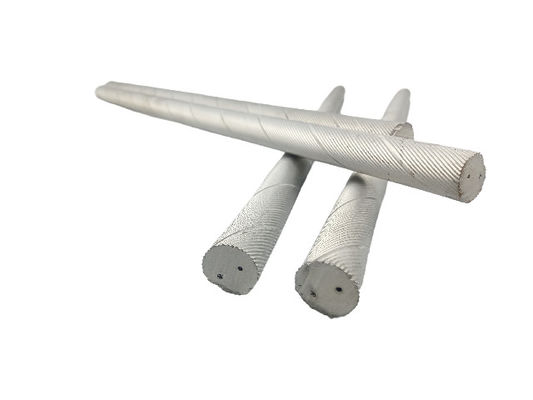
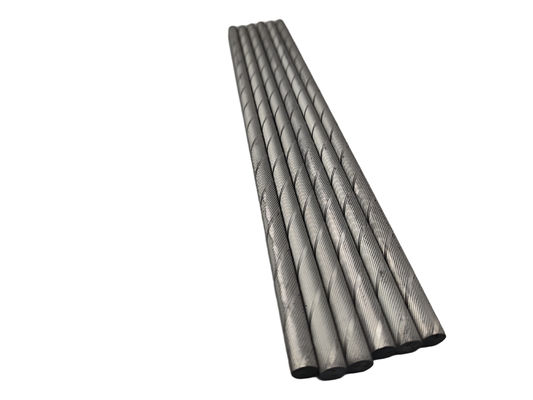
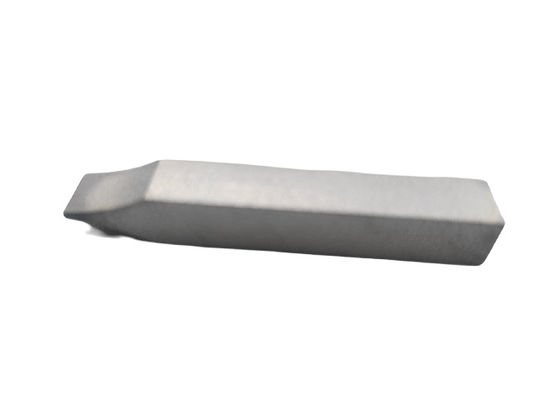
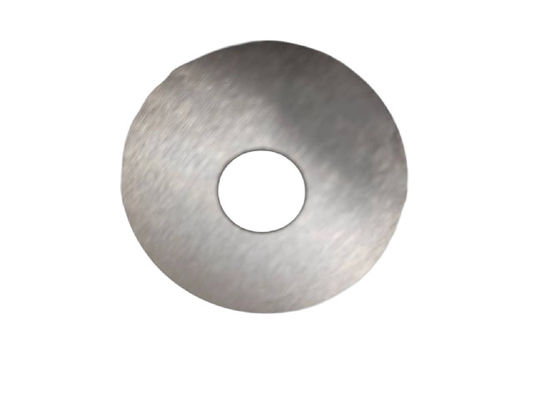
What enables a single metal to withstand the intense heat of industrial furnaces while serving as the foundation for precision medical equipment? The answer lies in tungsten—an industrial metal renowned for its exceptionally high melting point, density, and hardness. However, these outstanding physical properties also present unprecedented challenges in precision machining. This article explores the technical difficulties in tungsten processing and provides practical solutions to help engineers and manufacturers overcome these obstacles.
Tungsten: A Metal of Extreme Properties
Known chemically as Wolfram with an atomic weight of 183.84, tungsten ranks among the heaviest and densest non-radioactive metals, comparable to gold (196.97) and lead (207.2). Unlike these softer metals, tungsten exhibits remarkable hardness—registering 7.5 on the Mohs scale, significantly higher than standard steel (4-4.5). Its exceptional heat resistance gives it the highest melting point among refractory metals, surpassing even molybdenum. This unique combination of density, hardness, and thermal stability makes tungsten invaluable across numerous industrial applications.
The Machining Challenge
These superior characteristics make tungsten exceptionally difficult to machine. When a material's hardness exceeds that of cutting tools, shaping it becomes an engineering feat. Traditional methods typically employ sintering—compacting tungsten powder into forms before heating to fusion temperatures. Non-traditional techniques like laser cutting have gained popularity, yet mechanical machining remains essential for producing high-precision tungsten components.
Tungsten vs. Tungsten Carbide: Critical Differences
In metalworking, tungsten commonly appears as welding electrodes or in carbide cutting tools—the latter being widely available as drill bits. While tungsten is fundamental to these tools, tungsten carbide differs substantially from pure tungsten or tungsten alloys.
Tungsten carbide combines tungsten with carbon and other carbides (like titanium carbide) suspended in a metal matrix, formed into shapes through multiple sintering cycles. The resulting material achieves a Mohs hardness of 9—far exceeding pure tungsten—making it capable of machining tungsten alloys effectively.
Practical Machining Strategies
Tungsten's hardness introduces brittleness, particularly at room temperature where chipping frequently occurs. Researchers have developed several approaches:
-
Heating materials above their ductile-to-brittle transition temperature (400-800°F)
-
Cryogenic cooling to improve machinability
For shops lacking specialized equipment, these temperature extremes prove impractical. The following guidelines assume room-temperature operations with standard tooling.
Tungsten alloys share machining characteristics with gray cast iron. Accordingly, similar speeds and feed rates apply when using C-2 carbide tooling, solid carbide end mills, alumina grinding wheels, or diamond tools (though the latter are cost-prohibitive for most applications).
Turning, Boring, and Finishing Parameters
|
Operation
|
Feed Rate (IPR)
|
Depth of Cut
|
Speed (RPM)
|
|
Roughing
|
0.008-0.010"
|
0.050-0.200"
|
250-350
|
|
Finishing
|
0.003-0.005"
|
0.010-0.030"
|
250-350
|
Positive rake angles (tool faces inclined inward from cutting edges) reduce cutting forces, vibration, and chipping for smoother finishes. Air cooling suffices, though coolants may be used.
Milling Techniques
-
Feed:
Start at 0.003" per tooth
-
Speed:
75-750 SFM with carbide tools (adjust for depth—deeper cuts require slower speeds)
-
Method:
Climb milling (feed direction matches cutter rotation) minimizes tool loading
Drilling and Tapping
Carbide tooling is mandatory for drilling tungsten. Air cooling or molybdenum disulfide cutting fluids work effectively. Drill holes to 50-55% of tap diameter for threading. Solid carbide taps withstand tungsten's toughness, extending tool life. For multiple holes, solid carbide drills are essential.
A fundamental rule in tungsten machining: proceed methodically to preserve both tools and expensive workpieces. Dull tools compromise precision and risk damaging materials—maintain sharp tooling and replace as needed.
Industrial Applications
Despite being among the hardest known metals, tungsten's industrial value primarily stems from its thermal resistance and density. Key uses include:
-
Furnace linings in high-temperature industrial settings
-
High-density, compact aircraft ballast and counterweights
-
Armor-piercing ammunition cores (where hardness and density combine)
-
Radiation shielding and collimation in medical/scientific equipment
In medical imaging, tungsten collimators precisely focus X-ray beams. Similar applications exist across scientific instrumentation and physics research. However, tungsten's rarity makes sourcing raw material nearly as challenging as machining it.
Sourcing Considerations
Industrial processes often yield usable tungsten remnants—plates, rods, and alloys like Hevimet or Densalloy remain machinable when obtained through reputable recyclers. Given tungsten's melting requirements and labor-intensive processing, applications must justify its premium cost.


 Your message must be between 20-3,000 characters!