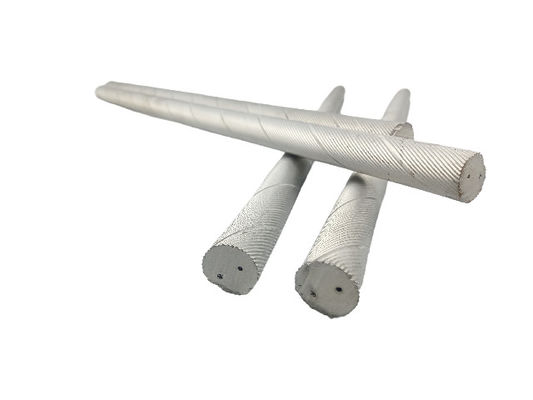
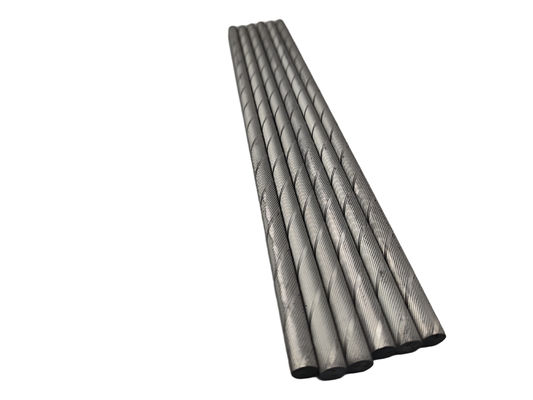
In modern manufacturing, diamond-coated milling cutters have emerged as essential tools for machining hard, abrasive materials. These specialized cutters combine the exceptional hardness of diamond with advanced coating technologies to deliver superior performance in challenging applications.
In modern manufacturing, diamond-coated milling cutters have emerged as essential tools for machining hard, abrasive materials. These specialized cutters combine the exceptional hardness of diamond with advanced coating technologies to deliver superior performance in challenging applications.
What Are Diamond-Coated Milling Cutters?
Diamond-coated milling cutters feature a thin layer of diamond either deposited on the tool surface or embedded as particles. This coating transforms ordinary cutting tools into high-performance instruments capable of machining materials that would quickly degrade conventional cutters.
Diamond's exceptional properties make it ideal for cutting applications. With a Mohs hardness rating of 10—the highest possible—diamond offers unparalleled wear resistance and durability. This enables diamond-coated tools to maintain sharp cutting edges significantly longer than uncoated alternatives when processing abrasive materials like graphite, ceramics, composites, and non-ferrous alloys.
Types of Diamond-Coated Cutters
Manufacturers produce several variants of diamond-coated milling cutters, each suited to specific applications:
Amorphous Diamond Coated Cutters
These tools feature an ultra-thin diamond coating (0.5-2.5 microns) applied through Physical Vapor Deposition (PVD). The PVD process creates a dense, smooth coating with low friction coefficients, making these cutters ideal for precision machining of carbon fiber and precious metals where surface finish quality is critical.
CVD Diamond Coated Cutters
Chemical Vapor Deposition (CVD) produces thicker diamond coatings (8-10 microns) by growing multiple crystalline diamond layers on the tool surface. This method carefully controls temperature, pressure, and gas composition to ensure pure diamond formation rather than graphite. Research indicates optimal coating adhesion occurs with carbide substrates containing 6% cobalt. CVD-coated tools excel at machining graphite and composites that generate powdery chips.
Polycrystalline Diamond (PCD) Cutters
PCD cutters incorporate sintered diamond segments (0.010-0.030 inches thick) brazed onto carbide tool bodies. The manufacturing process involves high-pressure, high-temperature sintering of diamond powder with cobalt as a binder. With hardness ranging from 80-98 GPa, PCD tools handle the most abrasive non-ferrous materials.
Diamond's Structural Advantages
Diamond's exceptional properties stem from its unique crystal structure. As a carbon allotrope, diamond arranges its atoms in a three-dimensional tetrahedral network where each carbon atom forms four covalent bonds. This rigid structure contrasts sharply with graphite's layered arrangement, explaining diamond's unmatched hardness and strength.
Comparative Analysis
| Characteristic |
Amorphous Diamond |
CVD Diamond |
PCD |
| Coating Thickness |
0.5-2.5 microns |
8-10 microns |
0.010-0.030 inches |
| Hardness |
Moderate |
High |
Extreme |
| Edge Sharpness |
Precision |
Moderate |
Precision |
| Ideal Applications |
Carbon fiber, precious metals |
Graphite, composites |
Abrasive non-ferrous metals |
Industrial Applications
- Aerospace: Machining carbon fiber and ceramic matrix composites for lightweight components
- Automotive: Processing aluminum and magnesium alloys for weight reduction
- Electronics: Precision machining of PCBs and ceramic substrates
- Tooling: Manufacturing hard alloy and ceramic molds
- Jewelry: Working precious metals and gemstones
Selection and Usage Considerations
Optimal tool performance requires careful selection based on:
- Workpiece material properties
- Required machining processes
- Machine tool capabilities
- Cost-performance balance
Proper maintenance extends tool life through:
- Appropriate cutting parameters
- Effective coolant application
- Regular wear inspection
- Correct storage practices
Limitations and Future Developments
While exceptionally versatile, diamond-coated tools cannot machine ferrous metals due to diamond's chemical reactivity with iron at high temperatures. Current research focuses on:
- Advanced coating technologies like nano-diamond and multilayer coatings
- Improved tool geometries for enhanced chip evacuation and heat dissipation
- Expanding applications in emerging fields like medical device manufacturing
As manufacturing demands grow increasingly stringent, diamond-coated milling cutters will continue evolving to meet the challenges of machining tomorrow's advanced materials.


 Your message must be between 20-3,000 characters!