Imagine this: a meticulously machined workpiece is nearing completion, but during the final parting operation, improper handling causes the tool to break, the workpiece to fly off, or even damage the lathe. This is not an exaggeration but a real risk in lathe parting operations. This article delves into the intricacies of lathe parting, offering detailed guidance to ensure safe and efficient execution of this critical process.
Introduction
Lathe parting, also known as cutoff or grooving, is a common turning operation used to separate a workpiece from the stock material. While it may seem straightforward in theory, it demands high precision and attention to detail in practice. Neglecting key aspects can lead to tool breakage, workpiece ejection, or even permanent damage to the lathe's X-axis feed system. Therefore, operators must remain highly focused and seek experienced guidance when attempting parting for the first time.
1. Selecting the Right Parting Tool
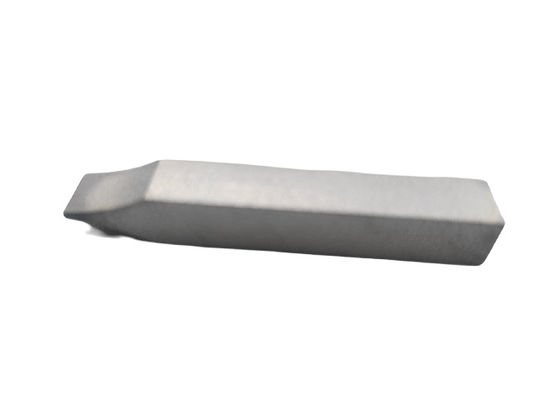
Parting tools fall into two main categories: High-Speed Steel (HSS) tools and carbide-tipped tools.
-
High-Speed Steel Tools: More affordable and durable, these tools can be manually reground if damaged. They are suitable for low-speed and interrupted cutting, particularly when machining ductile materials like mild steel.
-
Carbide-Tipped Tools: These withstand higher cutting temperatures and allow for faster cutting speeds. However, damaged inserts must be replaced. They are ideal for high-speed and continuous cutting, especially for harder materials like high-strength alloy steels. Carbide inserts often feature indexable designs for easy replacement.
Carbide parting inserts come in various models tailored to different materials and efficiency requirements. Most models offer left-hand, right-hand, and neutral axial rake angles, determining whether the residual "pip" remains on the chuck-held workpiece or the separated part. Additionally, carbide inserts may feature high-temperature coatings like Titanium Nitride (TiN), Titanium Carbonitride (TiCN), or Titanium Aluminum Nitride (TiAlN) to enhance wear and heat resistance, prolonging tool life.
2. Inspecting the Parting Tool
Before use, thoroughly inspect the parting tool:
-
HSS Tools: Check the cutting edge for sharpness. Dull or chipped edges require grinding or honing to restore sharpness, while maintaining the original geometry to avoid weakening the tool.
-
Indexable Carbide Tools: Examine inserts for chips, cracks, or wear. Replace damaged inserts immediately and ensure proper installation and tightness of fastening screws.
3. Maximizing Tool Rigidity
Tool rigidity is critical in parting operations. Insufficient rigidity causes vibration, unstable cutting, and potential tool or workpiece damage. To maximize rigidity:
-
Minimize Tool Overhang: Reduce the insert's extension from the toolholder as much as possible. Longer overhangs decrease rigidity and increase vibration. For larger or stronger workpieces, progressively shorten the overhang as cutting depth increases.
-
Cut Close to the Chuck: Perform parting within 1/8 inch of the chuck jaws to maximize workpiece rigidity. Cutting farther away induces workpiece deflection, increasing cutting difficulty and tool wear.
4. Aligning the Parting Tool
The parting tool must be perfectly aligned with the lathe's X-axis to function correctly. Misalignment leads to poor cutting, accelerated tool wear, and scrapped workpieces. Two common alignment methods are:
-
Using a 1-2-3 Block: This precision-ground block ensures parallelism and perpendicularity. Place one face against the chuck's face, loosen the toolholder, and align the toolholder's side with another block face. Tighten the toolholder to secure alignment.
-
Using a Dial Indicator: Mount the indicator on the lathe bed (without sliding to avoid scratching). Touch the indicator to the toolholder's side and move the cross-slide (X-axis). Adjust the toolholder until the indicator shows ≤ ±0.001" variation along the tool's length.
5. Setting Tool Height
Like all lathe tools, parting tools must be set as close as possible to the spindle's vertical centerline. Never assume pre-set height in toolholders is correct. Incorrect height prevents proper cutting and risks tool damage. Use a lathe level (bubble level) or ruler technique to adjust height until the tooltip aligns with the centerline.
6. Manual Feeding and Lubrication
On manual lathes:
-
Never use automatic feed: Manual feeding provides better control and allows sensing of poor chip evacuation.
-
Apply abundant cutting fluid: Parting generates significant heat due to wide cutting widths. Flood the cutting zone to cool the tool and workpiece. Suitable fluids include emulsified oils, cutting oils, or synthetic coolants, selected based on material and conditions.
-
Use peck feeding: Intermittent feeding helps break chips, improves cooling, and reduces cutting forces. Adjust peck frequency and depth based on material and conditions.
7. Additional Considerations
Cutting Speed
For manual lathes, set parting speeds to ~60% of recommended values for the material/tool combination. Example calculations for 1" diameter aluminum and mild steel:
-
Aluminum: ~570 RPM (from 250 ft/min base speed)
-
Mild Steel: ~230 RPM (from 100 ft/min base speed)
Note: Prioritize chuck safety—maximum safe RPM in labs is ~570; never exceed 600 RPM for small workpieces regardless of calculations.
Workpiece Handling
To safely catch parted-off pieces:
-
For through-holed parts: Insert an undersized drill bit to prevent dropping (avoid tool-bit contact).
-
For solid parts: Place a rag beneath to cushion the fall.
Conclusion
Lathe parting, while seemingly simple, involves nuanced techniques and safety protocols. Mastering these ensures risk-free, precise, and efficient operations. This guide equips operators with essential knowledge to excel in parting tasks while safeguarding equipment and workpieces.


 Your message must be between 20-3,000 characters!