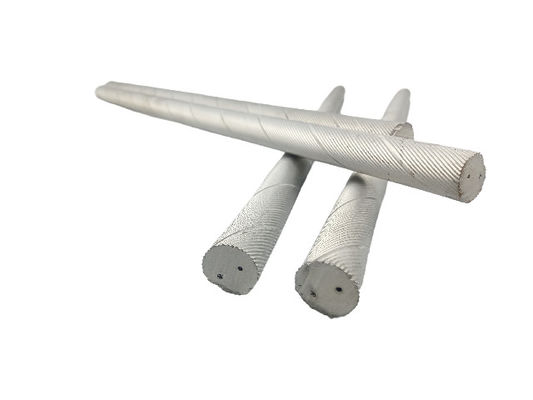
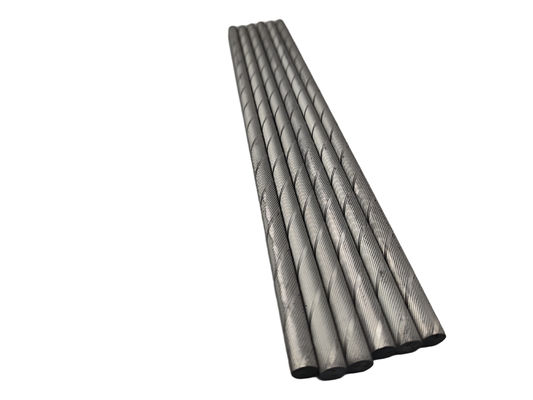
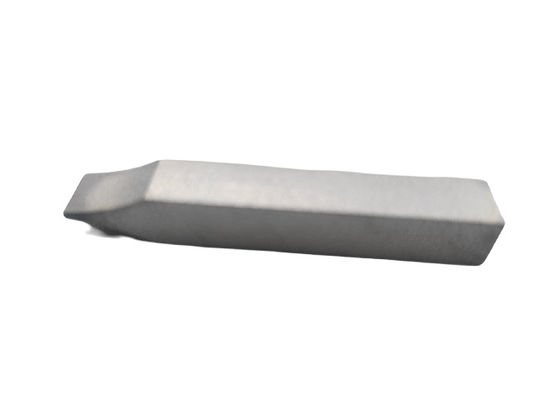
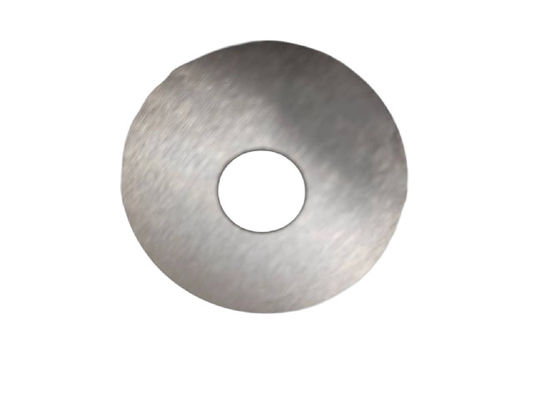
In the world of precision machining, every cut and every form depends on the sharpness and reliability of cutting tools. These tools, like a warrior's blade, directly determine processing efficiency, accuracy, and final product quality. The soul of any cutting tool lies in its material composition, where two giants dominate: High-Speed Steel (HSS) and Cemented Carbide.
The Crucible of Performance: Wear Resistance vs. Heat Resistance
In cutting tool materials, wear resistance and heat resistance are the ultimate performance benchmarks. During high-speed cutting operations, tools experience intense friction with workpiece materials, leading to wear and potential failure. Simultaneously, the substantial heat generated affects tool hardness and strength.
Carbide: The High-Temperature Champion
-
Exceptional melting point:
With tungsten carbide (WC) as its primary component, carbide maintains structural integrity up to 2870°C.
-
Thermal insulation:
Its low thermal conductivity prevents heat transfer to the tool interior, minimizing thermal deformation.
-
High-temperature hardness:
Maintains cutting edge sharpness under extreme conditions, enabling superior machining efficiency.
HSS: The Thermal Compromise
-
Begins losing hardness above 538°C (1000°F) due to alloy element phase changes
-
Susceptible to thermal wear and edge dulling at elevated temperatures
-
Operates under stricter speed limitations compared to carbide tools
Material Composition: The Foundation of Performance
Carbide's Structural Advantage
This composite material consists primarily of tungsten carbide (WC) particles bonded with cobalt (Co), typically containing 70-94% WC and 3-16% Co. Optional additives like titanium carbide (TiC) or tantalum carbide (TaC) enhance specific properties.
HSS: The Alloyed Alternative
A specialized alloy steel containing tungsten (W), carbon (C), chromium (Cr), molybdenum (Mo), vanadium (V), and sometimes cobalt (Co). The precise composition varies based on intended applications, with each element contributing to specific performance characteristics.
The Hardness-Toughness Paradox
Carbide's Dominance in Hardness
With Rockwell hardness ratings of 90-94 HRC versus HSS's 62-64 HRC, carbide tools offer:
-
Extended operational life between replacements
-
Higher sustained productivity
-
Lower long-term tooling costs despite higher initial investment
HSS's Resilience Advantage
-
While less hard, HSS provides critical benefits:
-
Superior impact resistance for interrupted cutting operations
-
Better performance with tough materials like cast iron and forged steel
-
Reduced chipping risk in vibration-prone machining conditions
Practical Considerations
HSS Benefits:
-
Cost-effective for budget-conscious operations
-
Easier maintenance and regrinding capabilities
-
Excellent for general-purpose machining of non-ferrous metals
Carbide Advantages:
-
Unmatched performance in high-speed applications
-
Essential for machining hardened steels and composites
-
Superior surface finish capabilities
Application-Specific Selection
Optimal HSS Applications:
-
General maintenance drilling operations
-
Milling applications with significant vibration
-
Turning operations requiring interrupted cuts
Preferred Carbide Uses:
-
Precision hole-making in hardened materials
-
High-speed milling of abrasive composites
-
CNC turning operations demanding tight tolerances
The Strategic Decision
Selecting between HSS and carbide requires careful evaluation of:
-
Workpiece material properties (hardness, toughness, abrasiveness)
-
Machining method (continuous vs. interrupted cutting)
-
Required production speeds and feeds
-
Machine tool stability and rigidity
-
Total cost considerations beyond initial purchase price
Both materials represent excellent choices when matched to their ideal operating conditions. The informed selection between these cutting tool solutions can significantly impact manufacturing efficiency, product quality, and operational economics across industries ranging from automotive to aerospace production.


 Your message must be between 20-3,000 characters!