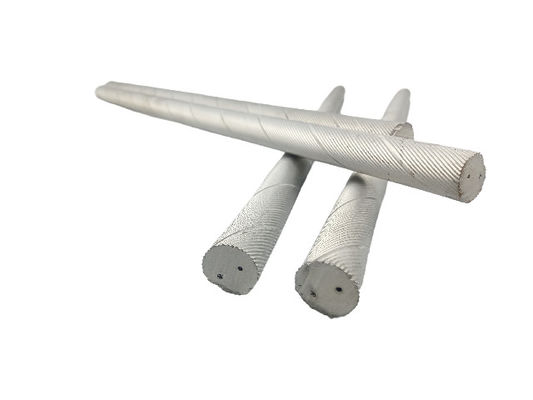
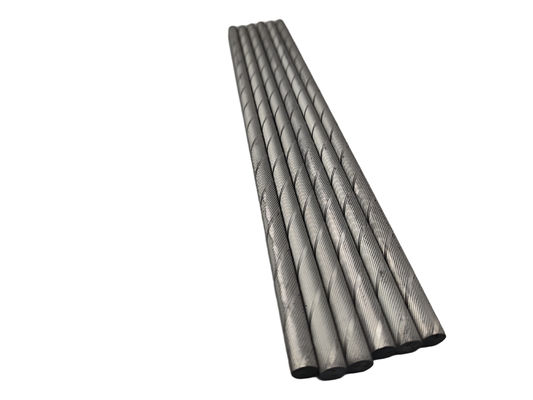
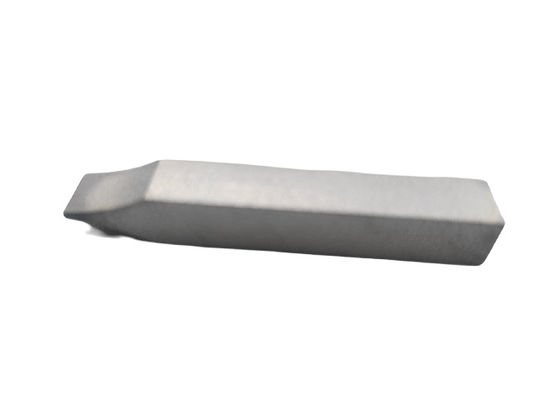
What enables steel giants to chew through solid rock? The answer lies not in the brute force of a single material, but in a sophisticated synergy—the perfect collaboration between hard alloy tips and steel drill rods. Yet, how can these two vastly different materials bond so firmly that they remain unshaken under extreme working conditions?
This article delves into a critical process in mining tool manufacturing: the brazing connection between hard alloy tips and steel drill rods. We will examine the principles of brazing technology, select suitable brazing alloys for mining tool production, and highlight a high-performance brazing flux that enhances the durability and reliability of mining equipment.
1. Brazing: The Bridge Between Dissimilar Metals
In modern mining operations, automation and continuous workflows have become standard. Large drilling equipment bears the responsibility of crushing rock formations. The core component of these machines is the drill bit, composed of a steel drill rod and a hard alloy tip. While steel is robust, it struggles against the hardness of rock. Hard alloy tips, with their superior hardness and wear resistance, become the key to cutting through rock.
How can hard alloy tips be securely attached to steel drill rods to withstand the harsh demands of mining operations? Brazing technology provides the solution. Brazing is a metal-joining process where a filler metal is melted to form a metallurgical bond between the base materials. Compared to welding, brazing occurs at lower temperatures, minimizing thermal effects on the base materials, making it ideal for joining dissimilar metals.
The American Welding Society (AWS) defines brazing as a process that uses filler metals with melting points above 450°C (840°F) but below the melting points of the base metals to achieve a "bond." This "bond" is not mere adhesion but refers to the formation of a new metallic entity between the filler and base materials—one that can even surpass the strength of the original materials.
2. Key Elements of Brazing: Filler Metals and Fluxes
A successful brazed joint depends not only on proper heating but also on the careful selection of filler metals and fluxes.
Filler Metal Selection
For brazing hard alloy tips to steel drill rods, silver-based fillers are typically avoided in favor of higher-melting-point alloys. Below are three recommended alloys for mining tool brazing. Notably, all three contain manganese, which plays a vital role in hard alloy brazing. These fillers are usually supplied as flat sheets or preforms.
|
Alloy Composition
|
Primary Advantages
|
Applications
|
|
Cu-Mn-Ni
|
High strength, excellent thermal fatigue resistance
|
Heavy-duty drilling tools
|
|
Cu-Mn-Zn
|
Good fluidity, cost-effective
|
General-purpose mining bits
|
|
Cu-Mn-Co
|
Superior wear resistance, high-temperature stability
|
Extreme-condition drilling
|
Flux Selection
Fluxes serve three critical functions in brazing: oxide removal, surface wetting enhancement, and filler metal flow promotion. For hard alloy brazing, fluoride-based fluxes are commonly used due to their ability to dissolve refractory oxides on carbide surfaces.


 Your message must be between 20-3,000 characters!