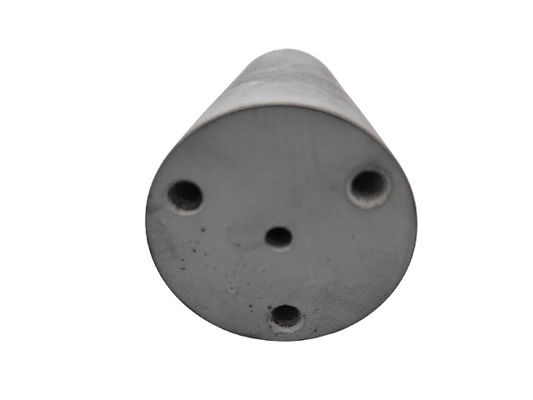
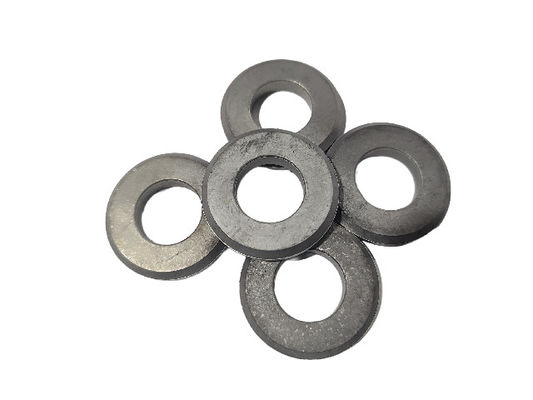
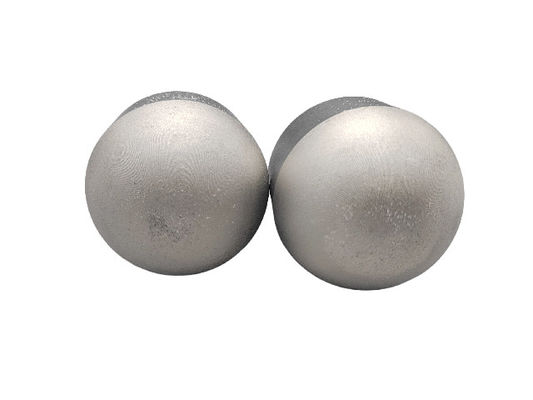
Imagine two components of identical volume—one light as air, the other heavy as lead. In engineering design, weight often becomes a decisive factor. While cemented carbide (commonly called tungsten carbide) is renowned for its exceptional hardness and wear resistance, its density characteristics frequently go overlooked despite directly impacting final product performance and application scope.
Composition Dictates Density
Cemented carbide, a composite material produced through powder metallurgy, combines refractory metal carbides (tungsten carbide WC, titanium carbide TiC, tantalum carbide TaC) with binder metals (typically cobalt Co). Unlike monolithic materials, its density isn't fixed but varies significantly with composition. The standard EN 23 369 (ISO 3369) establishes precise measurement methods for these density variations.
The constituent materials exhibit dramatic density differences: tungsten carbide (WC) measures approximately 15.7 g/cm³, cobalt (Co) 8.9 g/cm³, tantalum carbide (TaC) 13.2 g/cm³, while titanium carbide (TiC) registers a comparatively light 4.9 g/cm³. These disparities enable engineers to fine-tune density through strategic formulation adjustments.
Engineering Implications
This tunability creates application-specific advantages. High-speed cutting tools benefit from reduced density, lowering inertial forces to enhance precision and efficiency. Conversely, vibration-resistant applications require higher densities for improved stability. Typically, cemented carbide densities exceed steel by 50-100%, meaning equivalent volumes weigh nearly twice as much—a critical consideration in weight-sensitive sectors like aerospace and motorsports.
Manufacturing Precision
Production parameters equally influence final density. Sintering temperature, pressure, and duration all affect material consolidation, necessitating rigorous process controls to meet design specifications. These manufacturing variables create opportunities to optimize material performance beyond simple composition adjustments.
Performance Tradeoffs
Density profoundly impacts mechanical properties—higher densities generally increase hardness and strength while reducing toughness. This creates an engineering balancing act where material selection must carefully weigh density against other performance characteristics to achieve optimal solutions for specific operational demands.
The strategic manipulation of cemented carbide density represents a powerful tool for engineers, enabling precise control over component weight and performance characteristics across diverse industrial applications.


 Your message must be between 20-3,000 characters!