Imagine a saw blade production line that eliminates expensive brazing alloys and tedious pretreatment processes, directly "welding" tungsten carbide tips onto steel saw bodies. The potential cost savings and efficiency gains are substantial. This is the promise of tungsten steel welding technology - an innovative process transforming traditional saw blade manufacturing.
Understanding Tungsten Steel Welding: How It Differs from Traditional Methods
The term "welding" in this context doesn't refer to conventional welding techniques. Instead, it describes a process that bonds tungsten carbide tips to steel substrates without brazing alloys. While this connection might not always constitute true fusion welding, it creates a specialized metallurgical bond that meets the functional requirements of saw blades.
Core Advantages: Cost Reduction and Process Simplification
The most significant benefit of tungsten steel welding lies in substantial cost reduction. Traditional brazing requires extensive use of brazing alloys and pretreatment processes like tin plating for tungsten carbide tips. Tungsten steel welding eliminates these steps by directly bonding specially surface-treated tips to steel saw bodies.
This technology also streamlines production. Conventional brazing involves multiple steps including brazing, cooling, and cleaning, while tungsten steel welding consolidates the process into a single operation, dramatically shortening production cycles. For high-volume manufacturers, this represents a major efficiency breakthrough.
The Key Enabler: Advanced Surface Treatment Technology
The success of tungsten steel welding hinges on specialized surface treatment of tungsten carbide tips. This typically creates a cobalt-rich layer on the tips' surface. Cobalt's magnetic properties and metallurgical compatibility with steel enable the bonding process: heated steel melts onto the treated surface, forming a durable metallurgical bond through alloying reactions.
This surface treatment represents the technology's core and determines welding quality. Different treatment methods yield varying results, making it crucial to partner with suppliers possessing mature surface treatment expertise.
Application Spectrum: From Basic to Premium Markets
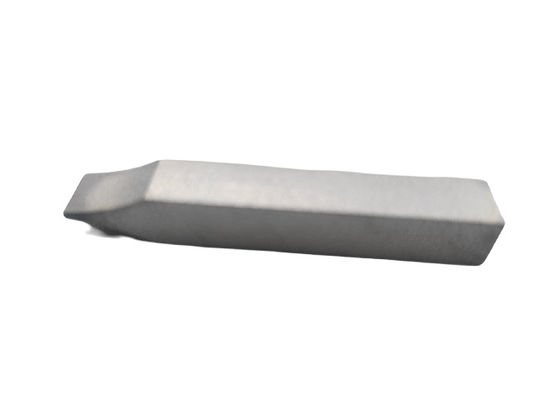
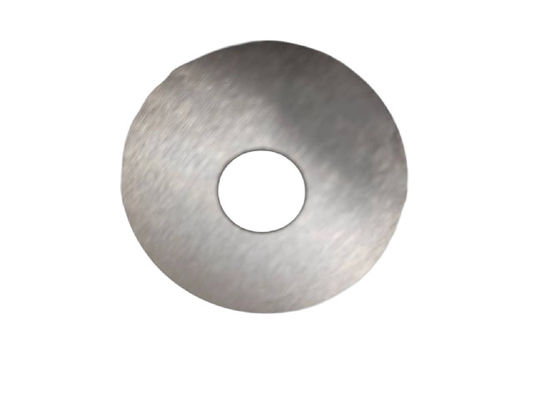
Currently, tungsten steel welding serves two primary markets: budget hand saw blades for DIY enthusiasts and high-end tungsten carbide band saws for cutting difficult materials. However, the technology's potential extends far beyond these applications.
As the technology advances, it could enable production of specialized cutting tools, drill bits, milling cutters, and even serve aerospace and automotive manufacturing sectors.
Technical Challenges: Strength, Impact Resistance and Consistency
Despite its advantages, tungsten steel welding faces several challenges. The bond strength and impact resistance may not match traditional brazing, as brazing alloys provide shock absorption that protects carbide tips. The harder tungsten steel weld is more prone to fracture.
Maintaining consistent quality presents another challenge. The process's sensitivity to parameter variations necessitates strict control measures and rigorous quality testing protocols.
Selecting the Appropriate Welding Process
-
Application requirements:
Different uses demand varying weld strengths (e.g., hard material cutting requires greater impact resistance)
-
Production volume:
High-volume operations suit automated systems, while smaller batches may use manual/semi-automatic equipment
-
Budget constraints:
Process costs vary significantly
-
Supplier capabilities:
Established providers ensure quality and support
Market Considerations: Identifying Authentic Products
The market contains inferior products falsely marketed as tungsten steel saw blades - actually steel blades with minimal tungsten carbide coating. These substandard products underperform genuine tungsten carbide blades and risk premature failure. Buyers should verify product authenticity with reputable manufacturers.
Future Outlook: Smart, Automated and Customized Solutions
Advancements in smart manufacturing will drive tungsten steel welding toward greater automation, precision, and customization. Future systems will automatically adjust welding parameters for optimal results while enabling tailored tip geometries for specialized applications.
Conclusion: A Transformative Manufacturing Trend
Tungsten steel welding represents a transformative approach to saw blade production, offering substantial cost and efficiency benefits. As the technology matures, its applications will expand across multiple industries, positioning it as a future standard in cutting tool manufacturing.


 Your message must be between 20-3,000 characters!