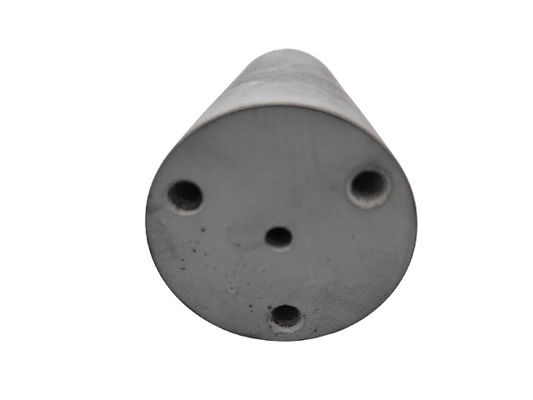
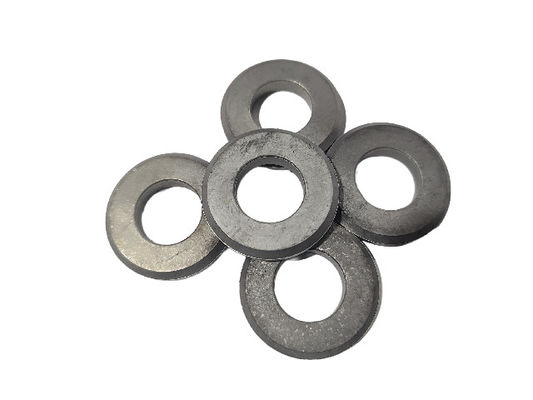
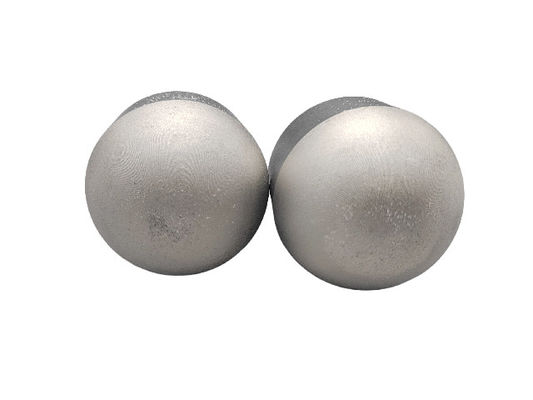
What enables certain materials to maintain exceptional performance under extreme conditions, playing pivotal roles in cutting-edge fields like aerospace and medical devices? Tungsten titanium carbide stands out as one such material, prized for its extraordinary strength and durability. This article examines the scientific principles behind tungsten titanium carbide, reveals its unique performance advantages, and explores its diverse industrial applications.
Composition and Structure of Tungsten Titanium Carbide
Tungsten titanium carbide isn't a single element but rather a composite material comprising tungsten (W), titanium (Ti), and carbon (C). More precisely, it belongs to the cemented carbide family—materials consisting of a metal matrix combined with hard carbide phases. In tungsten titanium carbide, tungsten and titanium form the metal matrix, while carbon atoms bond with metal atoms to create the hard carbide phase. This unique combination delivers exceptional strength and durability, making it ideal for high-performance applications.
The microstructure typically includes three key components:
-
Tungsten carbide (WC) grains:
The primary hard phase providing extreme hardness and wear resistance. The size, shape, and distribution of these grains significantly influence overall material performance.
-
Titanium carbide (TiC) grains:
These enhance oxidation resistance and high-temperature strength. Like WC grains, their characteristics critically affect material properties.
-
Binder phase:
Usually composed of cobalt (Co) or other metals, this matrix bonds the carbide grains together, providing toughness and impact resistance. The binder's composition and content balance strength, hardness, and toughness.
Scientific Explanation of Performance Advantages
The material's exceptional properties stem from its unique composition and microstructure:
1. Hardness and Wear Resistance
Both tungsten carbide and titanium carbide are extremely hard ceramic materials, far surpassing traditional metals. These hard phases distributed throughout the metal matrix effectively resist external abrasion and scratching. During wear, the carbide grains bear most of the load, preventing plastic deformation while their interfaces inhibit crack propagation.
2. Strength and Toughness
The metal matrix (tungsten and titanium) provides excellent strength and toughness to withstand substantial loads and impacts. It also distributes stress to the carbide phases, preventing brittle fractures. The binder phase plays a crucial role by absorbing energy and delaying crack expansion.
3. Corrosion and Oxidation Resistance
Titanium carbide significantly enhances these properties by reacting with oxygen or corrosive agents to form protective surface layers, making the material suitable for harsh environments like chemical processing and marine applications.
4. High-Temperature Performance
With high melting points and thermal stability, both tungsten and tungsten carbide maintain strength and hardness at elevated temperatures, making them ideal for cutting tools and heat-resistant components.
Industrial Applications
1. Cutting Tools
The material dominates manufacturing of drills, milling cutters, and saw blades, offering higher speeds, longer lifespan, and superior surface finishes compared to traditional high-speed steel tools.
2. Wear-Resistant Coatings
Applied to industrial equipment like pumps, valves, and bearings, these coatings dramatically extend service life by resisting wear, corrosion, and erosion.
3. Molds and Stamping Tools
Used in wire drawing dies, cold heading dies, and stamping molds, tungsten titanium carbide maintains dimensional accuracy and surface quality better than conventional materials.
4. Aerospace
Critical for aircraft engine components, turbine blade coatings, and landing gear parts, its thermal and mechanical stability ensures reliable operation in extreme conditions.
5. Medical Devices
Surgical blades, dental drills, and joint replacements benefit from the material's hardness, wear resistance, and biocompatibility, improving precision and patient outcomes.
6. Oil and Gas
Drill bits and pipeline coatings withstand demanding subterranean environments, enhancing drilling efficiency and infrastructure longevity.
Limitations and Future Developments
Despite its advantages, tungsten titanium carbide faces challenges including brittleness, difficult machining, and high costs due to rare metal content. Research focuses on:
-
Nanostructuring and composites:
Incorporating nano-scale carbides or combining with ceramics/polymers to enhance properties.
-
Gradient materials:
Engineering surface-to-core property variations for optimized performance.
-
3D printing:
Enabling complex geometries previously unattainable.
-
Smart materials:
Integrating sensors for real-time performance monitoring.
As technological advancements continue, tungsten titanium carbide is poised to expand its role across industries, driven by its unparalleled combination of strength, durability, and environmental resistance.


 Your message must be between 20-3,000 characters!