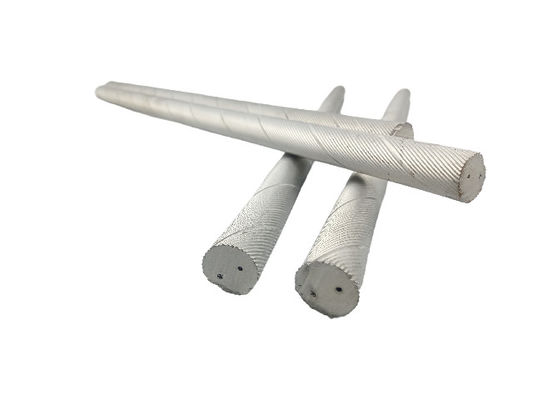
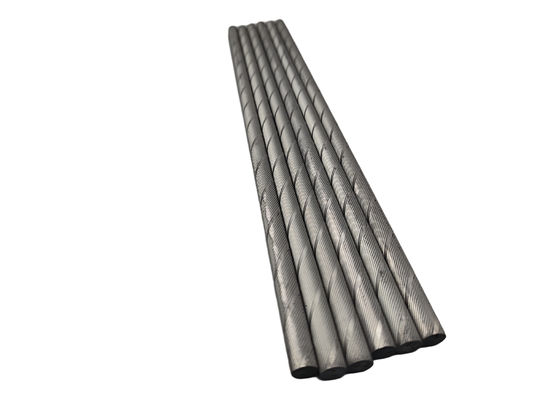
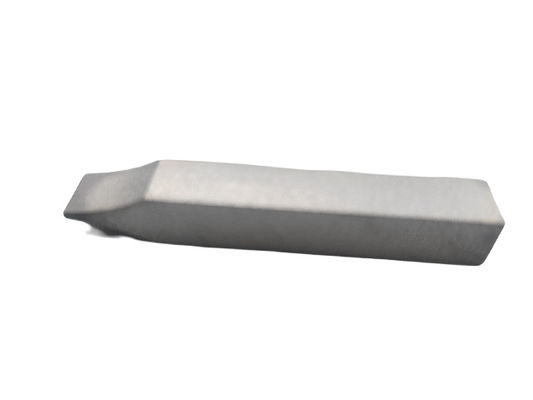
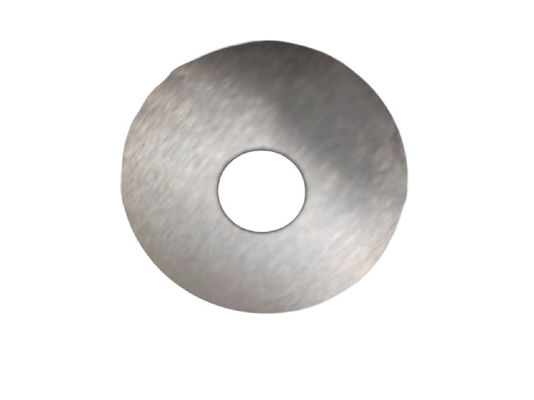
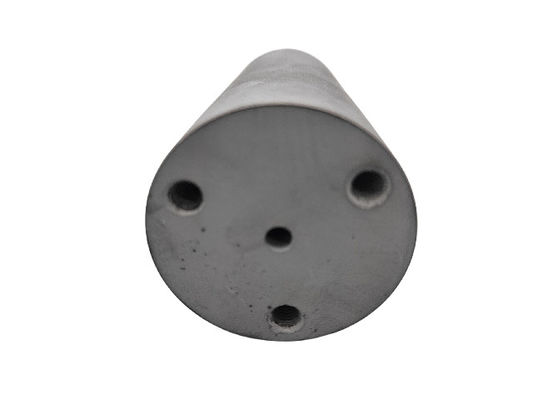
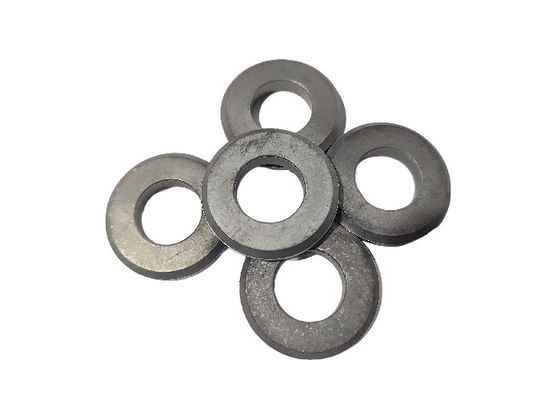
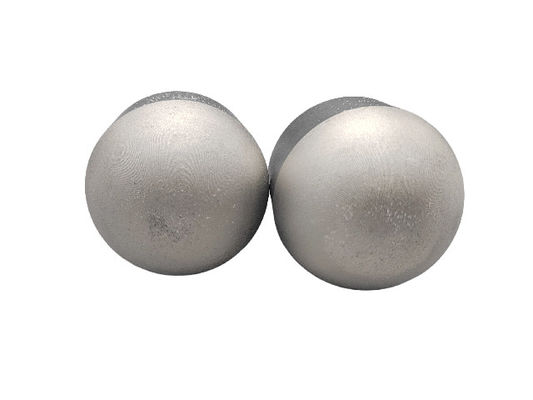
Imagine a material harder than steel, with wear resistance surpassing high-speed steel, capable of performing high-speed cutting even under extreme temperatures. This is cemented carbide, an engineering material that plays a pivotal role in modern industry. This article delves into the characteristics, classification, and diverse applications of this "industrial teeth."
What Is Cemented Carbide?
Cemented carbide, as the name suggests, is an alloy composed primarily of hard metal carbides bonded with iron-group metals. The most representative example is WC-Co alloy, where tungsten carbide (WC) serves as the hard phase and cobalt (Co) as the binder. The manufacturing process involves mixing WC and Co powders, followed by sintering at 1400°C to form a material with exceptional hardness and elastic modulus. Cemented carbide ranks second only to diamond in hardness, making it ideal for applications requiring extreme wear resistance, such as cutting tools and stamping dies.
Cemented Carbide vs. High-Speed Steel: A Performance Comparison
In metalworking, high-speed steel (HSS) and cemented carbide are two common tool materials. To better understand cemented carbide's advantages, we compare their properties:
|
Property
|
Cemented Carbide
|
High-Speed Steel
|
|
Hardness
|
High
|
Lower
|
|
Elastic Modulus
|
High
|
Lower
|
|
Compressive Strength
|
High
|
Lower
|
|
Thermal Conductivity
|
High
|
Lower
|
|
Density
|
High
|
Lower
|
|
Thermal Expansion Coefficient
|
Low
|
Higher
|
|
Impact Strength
|
Low
|
Higher
|
|
Fracture Toughness
|
Low
|
Higher
|
The table reveals that cemented carbide outperforms HSS in hardness, elastic modulus, compressive strength, thermal conductivity, and density. However, it exhibits lower thermal expansion coefficient, impact strength, and fracture toughness. This makes cemented carbide better suited for high-speed, precision cutting but less capable of withstanding impact loads.
Advantages of Cemented Carbide
-
Exceptional Hardness and Wear Resistance:
Cemented carbide's most notable feature is its extreme hardness, second only to diamond. Compared to HSS and tool steel, it offers superior wear resistance, significantly extending the lifespan of molds, fixtures, and other components while reducing maintenance frequency.
-
Outstanding Dimensional Stability:
Due to its high elastic modulus and compressive strength, cemented carbide resists deformation, making it ideal for manufacturing precision components requiring tight tolerances.
-
Recyclability:
Cemented carbide is an environmentally friendly material that can be recycled, aligning with sustainable development principles.
Limitations of Cemented Carbide
-
Brittleness:
Despite its extreme hardness, cemented carbide is relatively brittle, with certain grades prone to chipping or fracturing under impact.
-
Higher Cost:
The inclusion of rare metals like tungsten and cobalt increases production costs.
-
Challenging Machinability:
Its hardness—second only to diamond—requires specialized tools such as diamond grinding wheels, grinders, and EDM machines for processing.
Physical Properties
-
Hardness:
Far exceeds steel and stainless steel, trailing only diamond.
-
Density:
Approximately twice that of steel, comparable to gold.
-
Strength and Elasticity:
Combines high hardness with excellent strength and elasticity.
-
High-Temperature Performance:
Maintains hardness at elevated temperatures with minimal wear.
Manufacturing Process
Cemented carbide is not a natural metal but an artificially engineered alloy. It consists mainly of tungsten carbide (WC) and cobalt (Co). WC's high melting point (~2900°C) precludes traditional smelting methods. Instead, powder metallurgy is employed: WC and Co powders are mixed and sintered at 1300–1500°C, with Co acting as a binder during sintering.
Raw Material Sources
Primary sources of WC include China, Russia, and South Korea. Cobalt is extracted from ores in Finland, Canada, Australia, and the Democratic Republic of the Congo.
Applications
-
Cutting Tools:
Drills, milling cutters, and lathe tools for metalworking.
-
Molds:
Aluminum can molds for beverages, powder-forming molds for automotive engine parts, and molds for electronic components like smartphones.
-
Construction Machinery:
Tools for tunneling through hard rock and asphalt pavement cutting.
Functional Classification
-
Cutting-Grade:
Classified as P-type (for steel), M-type (general-purpose), and K-type (for cast iron) based on workpiece material.
-
Wear-Resistant Grade:
Further subdivided by binder type, WC grain size, and hardness.
Manufacturers often develop specialized grades to address specific challenges, tailoring properties to diverse needs.
Comparative Analysis
Cemented Carbide vs. Ceramics
Ceramics approach diamond in hardness (9+ on the Mohs scale vs. diamond's 10), surpassing tungsten and other hard metals. However, cemented carbide's properties can be finely tuned by adjusting WC grain size, binder content, and additives, offering versatility for varied applications.
Cemented Carbide vs. Cermet
Both are composites of carbide/nitride powders bonded with metal. Cemented carbide primarily uses WC with Co/Ni binders, while cermet relies on titanium compounds (TiC, TiCN) bonded with Ni/Co. Their core distinction lies in composition.
Cemented Carbide vs. HSS
Cemented carbide excels in hardness, heat resistance, and strength, whereas HSS offers greater impact toughness. Cost varies significantly due to raw materials and manufacturing methods, necessitating a balanced evaluation based on application and replacement cycles.
Weaknesses
-
Lower Toughness:
Compared to conventional steel alloys, cemented carbide's brittleness may lead to edge chipping or spalling.
-
High Density:
Its weight—twice that of steel—can be a drawback in certain applications.
Causes of Cracking
Differential thermal expansion coefficients between cemented carbide and metals may cause cracks in interference-fit components when operating temperatures deviate significantly from design values. High-impact forces can also induce cracking, necessitating careful consideration of fracture toughness requirements.
Selecting Cutting-Grade Cemented Carbide
Material choice depends on workpiece characteristics and thickness. For optimal cutting performance and edge retention, ultra-fine grain cemented carbide (composed of submicron WC particles) is often preferred.
Advantages of Cemented Carbide Tools
A key advantage is retention of hardness at high temperatures, ensuring stable performance even during high-speed machining that elevates tool temperatures.
Hardness Range
Typical hardness ranges from HRA88 to HRA92. Higher hardness enhances wear resistance but reduces impact resistance, increasing chipping risk.
Primary Composition
Cemented carbide's core component is WC, bonded with Co or Ni. Additives like chromium (Cr) may be incorporated to tailor properties for specific applications.


 Your message must be between 20-3,000 characters!